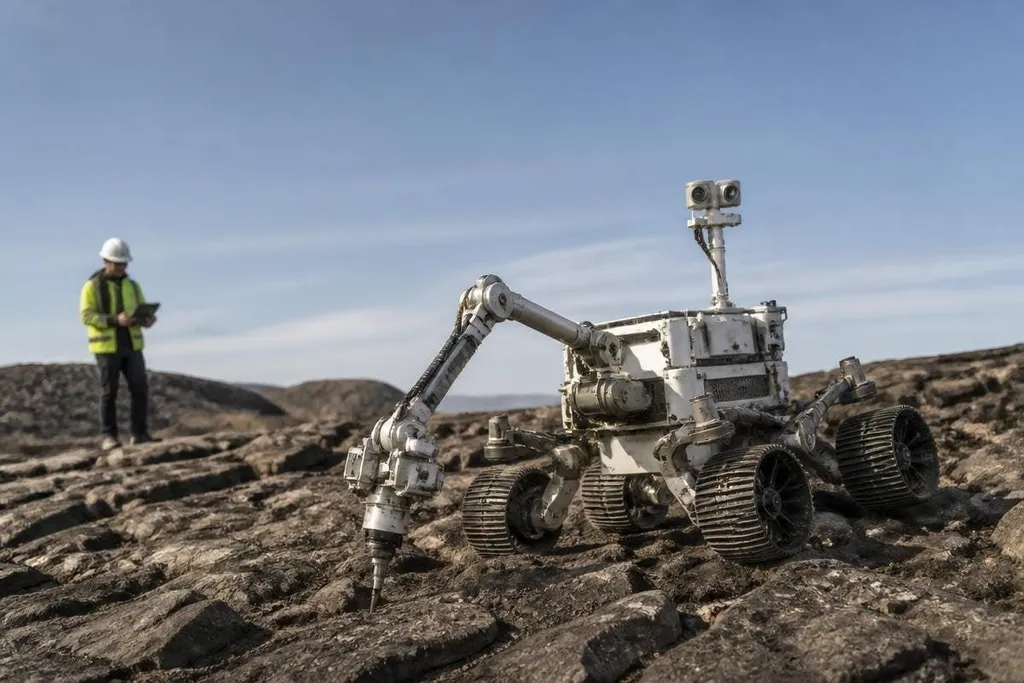
A space robot can cross rough ground, move a tool, or inspect a damaged part. The hard test starts when it must do those jobs far from people, with no quick repair and no second machine waiting nearby.
This global race matters to an engineer or company planning work beyond Earth because a robot's value will come from completed tasks, not from a polished demonstration.
Quick read
- Space robots need clear jobs before better hardware can matter.
- Remote control weakens as distance, delay, and poor data links grow.
- The best system may be a small tool built for one task, not a human-shaped robot.
The job comes before the robot
A mission may need a robot to collect material, inspect a surface, move equipment, or repair another machine. Each task calls for a different mix of reach, grip, power, mobility, and sensing, so a general robot can carry more hardware than the job needs.
That choice affects the whole mission. A robot with wheels may move well across a prepared floor, while a legged robot can handle broken ground but needs more control and power. A fixed arm may do careful work with less moving hardware, yet it needs the target brought within reach.
Space also removes many easy fixes. Dust can cover cameras. Heat can change battery output. A tool can jam when no technician can reach it.
These are design problems, and each one needs a test that matches the place where the robot will work.
Autonomy has a narrow meaning
People often use “autonomous” to mean a robot can work alone. In practice, the word can cover several different jobs: holding a route, avoiding a hazard, choosing a grasp, or deciding when a task has failed.
A system may handle one part without handling the rest. It can drive to a work area, then wait for a person to place its arm. It can identify a rock, then fail to collect it because the ground shifts under the tool. A useful claim must state which action the robot completes without help.
Communication adds another limit. A distant operator may send a plan, review images, and approve the next step, while the robot manages small movements on its own. That shared control can reduce risk, but it still needs a clear way to stop, retry, or ask for help.
A space robot's reach, signal delay, and recovery plan matter as much as its arm or wheels. Reports from Robot 24 can tie those details to named missions, test sites, and dates before the next section examines the hardware that has to survive them.
Hardware is only one part of the race
Better cameras and motors help, yet the support equipment decides what the robot can do. A machine may need a tool changer, a power unit, a thermal system, and software that records each action for later review.
The tool matters as much as the arm. A drill needs force control so it doesn't push the robot away from the surface. A sampler needs a way to hold material during movement. An inspection camera needs a stable view and enough light, or a sensor that works without it.
Software must also handle failure. If a wheel slips, the robot needs to detect the error and choose a safe next step. If a gripper misses, the system needs a new plan that won't damage the target or waste the mission's power.
What the race still has to prove
Public demonstrations can show motion, but they may leave out setup time, remote commands, failed attempts, or the work needed after the camera stops. Those details decide whether a robot can support a mission day after day.
The strongest proof will connect the machine to a named task and a repeatable test. It should state the surface, the tool, the amount of remote control, the number of successful runs, and the failures that remain.
I’d rank repeatable task results above a long list of robot features. A machine that completes one useful job in harsh conditions gives mission planners more to work with than a system that performs many motions without a clear purpose.
A buyer's checklist for space robots
Use these questions before you judge a project, paper, or product claim:
- Name the task: What physical job must the robot finish?
- Check the setting: What surface, dust, heat, lighting, and slope did the test use?
- Measure human input: Which steps did an operator control or approve?
- Count failures: How many trials worked, and what happened when the robot missed?
- Trace the tools: Can the robot carry, swap, and protect the tool the task requires?
- Plan recovery: What can the system do after a jam, bad reading, or loss of contact?
The global race will keep producing new arms, rovers, legs, and control systems. The useful question for each one is narrower: can it complete a defined job, recover from a known fault, and leave enough evidence for the next mission to trust it?